
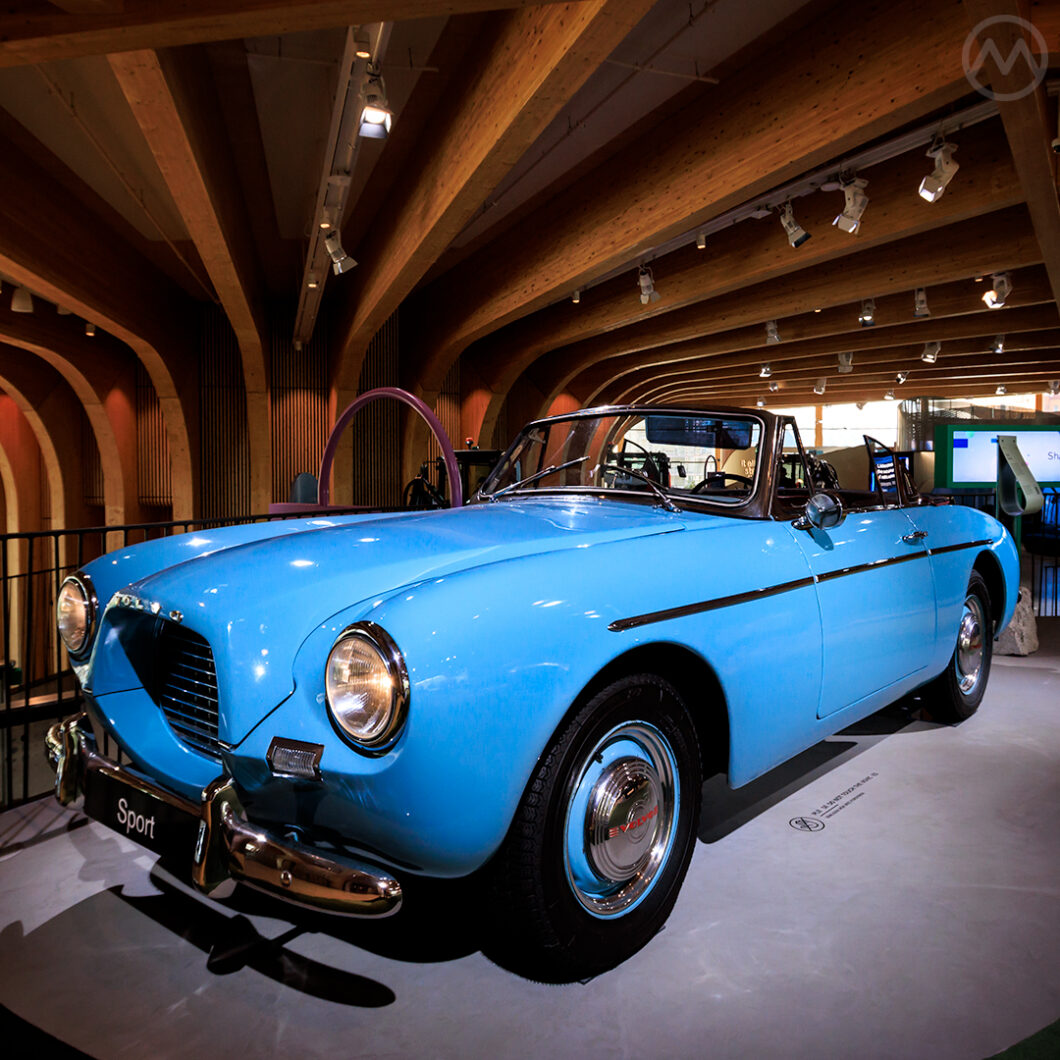
If you follow OldMotors on social media, you’ll have seen many Volvo P1800 photos posted to Instagram, but today, were looking at the much rarer Volvo P1900, which was first known as the “Volvo Sport.” While P1800 production ran for 12 years and roughly 37,000 were made, including the 1800ES Sportwagon, P1900 production lasted less than two years, and just 67 were made, plus a trio of prototypes. Sweden’s first attempt at a sports car, it ended up a famously flexible flop. But it is gorgeous.
The P1900 story begins in the early 1950s, but to understand why Volvo would build a decidedly un-Volvo-like car such as this in the first place, you have to go back a little further.
Volvo’s American Connection
By the early 1950s, Assar Gabrielsson had spent 25 years building Volvo up from its origins as a spinoff from ball bearing and machine tool manufacturer SKF in 1927 into a real automaker.
Gabrielsson was Volvo’s first managing director, and he was there right from the start, joining from SKF and being there on the day the first ÖV 4 left the factory. Early on, Volvo was a money-losing proposition, and it branched out into trucks in 1928 to help cover the bills. A year later, SKF was determined to offload Volvo to none other than American Charles W. Nash.
Gabrielsson and fellow manager Björn Prytz managed to convince the board not to do that, but Nash was already in transit to Sweden by then, and he and Gabrielsson and Nash became fast friends despite the deal getting scuttled. Throughout the 1930s, the Swede made regular visits to the U.S. and Kenosha to see how the big American firms built cars and to consult with Nash. As a result, there was always considerable cross-pollination between the American way of doing things and Volvo’s design and production philosophies, and Sweden liked American cars in general more than mainland European countries did.
It took a decade to build the first 10,000 Volvos, but the firm was modestly profitable by the end of 1930 and successful enough to be spun off entirely from SKF in 1935. Sales had grown considerably by 1939, and really took off postwar. To continue expansion, Gabrielsson looked once again to America.
The Origin of the Volvo P1900
In the early 1950s, sports cars were the tip of the spear for foreign automakers looking to succeed in America. With the exception of Austin and Volkswagen, whose regular cars were modestly popular right away in the States, it was sports cars in the mold of the MG T-Series that Americans actually wanted to buy when it came to imports. MG, Triumph, and Singer were the first to be popular but by the mid-1950s all sorts of import brands were trying to break through.
On a trip to the U.S. in 1953, Gabrielsson met Bill Tritt, founder of Glasspar. After the war, Tritt, a trained marine architect and boatbuilder, had begun building fiberglass boat hulls at his home in Costa Mesa. Fiberglass-reinforced plastic, patented as “Fiberglas,” was still only about a decade old at that time, but it had lots of advantages. It’s relatively strong and light; it doesn’t rust, and you can mold it into almost any shape. Just as Tritt’s boat hull projects were starting, mass-produced fiberglass household items were coming online. OldMotors has a 1950s “fiberglas” sink in our basement.

After finding success with boats, Tritt moved on to cars when U.S. Air Force Major Kenneth Brooks commissioned him to make a fiberglass body for a disused Willys Jeep frame. Tritt had taken many commissions, and indeed his first fiberglass boat had been a racing design commissioned by a friend. Thus was born the Glasspar G2 in 1951. It was unveiled at the 1951 Los Angeles motorama and quickly got a lot of attention. In fact, it inspired a whole raft of fiberglass sports cars ranging from the small-time Woodill Wildfire to the original Chevrolet Corvette and the Kaiser-Darrin.
Gabrielsson first met Tritt in the wake of a visit to Chevrolet and admist the hype surrounding the forthcoming Corvette. The newfound popularity of his own car certainly didn’t hurt his reputation. By the time of the Corvette, the G2 became a turn-key item you could buy fully assembled, usually powered by a Ford or Mercury Flathead V8, the most obvious choice for cheap speed at that time.
Gabrielsson wanted a mini-Corvette for Volvo, and had Tritt & Co. design the body and create the molds to build it. A coupe and a roadster were both penned, but only the latter emerged, and Volvo’s engineers designed a tube-frame chassis for it. Glasspar built the first prototypes and then the first 15 cars, then all the tooling went to Sweden in early 1955. The plan was to build 300 Volvo P1900 units a year, which even on its face would seem to contradict big hopes for export expansion, but it would at least give Volvo a halo sports car.
Plastique Fantastique
Tritt’s team did all the body development work and supposedly taught Volvo’s production engineers how to work with the molds and fiberglass generally.
Volvo’s team, led by future European Space Agency director and former Chrysler engineer Erik Quistgaard, created the chassis and a modified version of the 1.4-liter B14 engine from the PV444, the B14A. It would have twin carbs and a hotter camshaft than the regular B14, for about 70 horsepower, but the three-speed gearbox would be the same as the Ford-like sedan. Since the car would not be built in large volumes, there wasn’t much thought given to investing in modifying the PV444 chassis, and time and expense were limited.
In early 1954, Tritt’s team got the first few chassis and built the first car, which was shipped back to Sweden and displayed at Torslanda airport. Volvo’s own in-house designer, Jan Wilsgaard, hadn’t been consulted at all and was nonplussed, but he tidied up the design in various ways anyway. It lost its original fiberglass hardtop and blocky, angular windshield in this process in favor of a more rounded and substantial design.
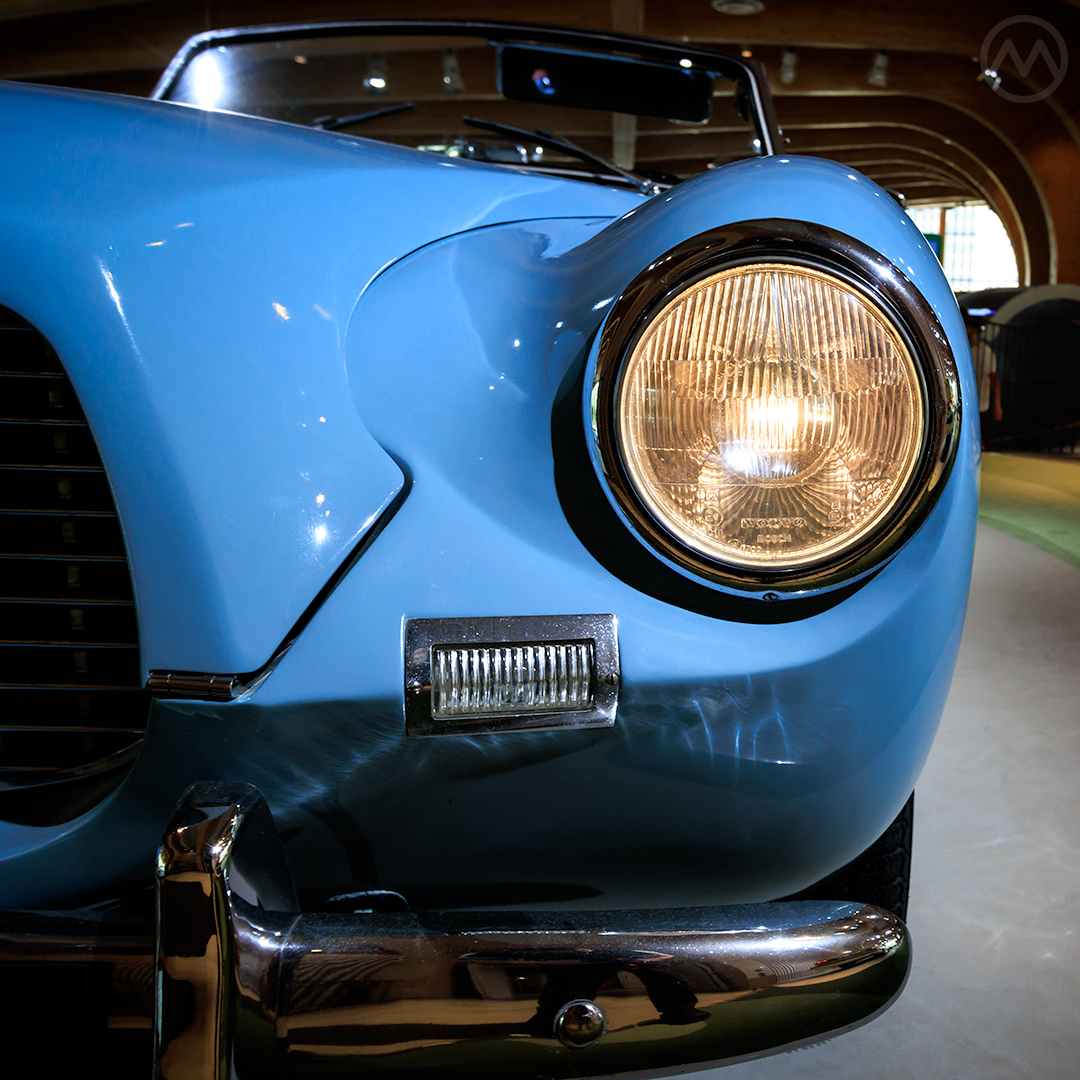
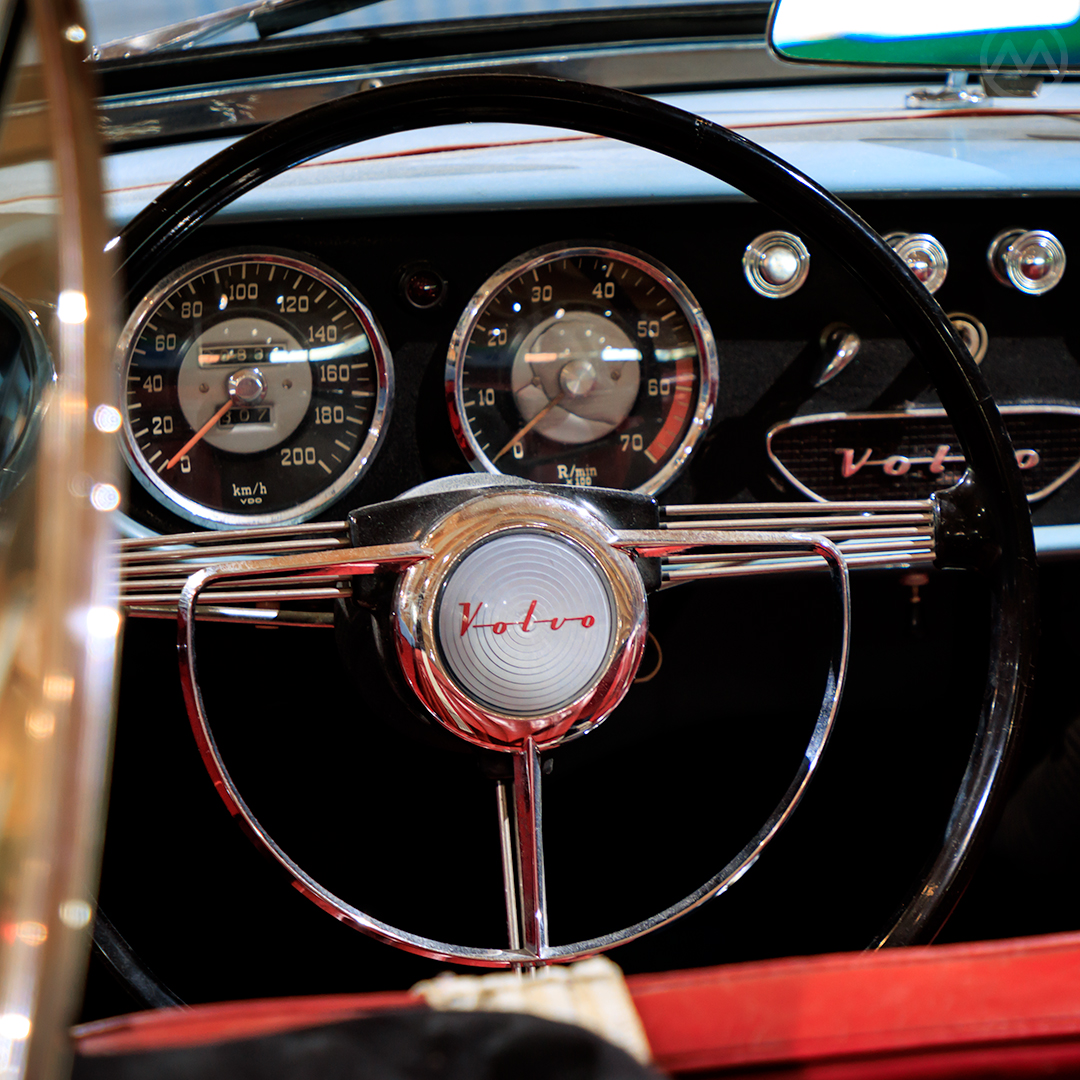
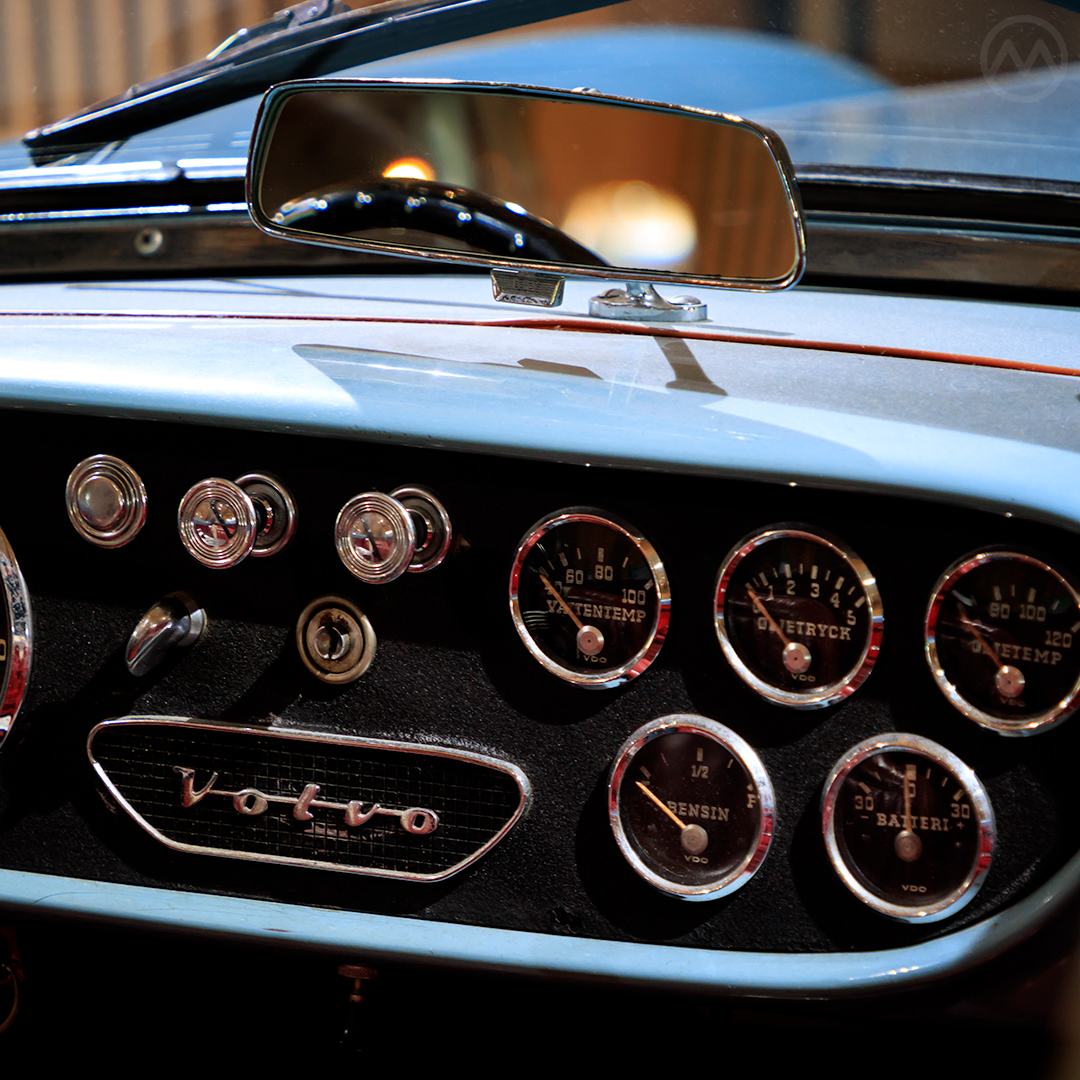
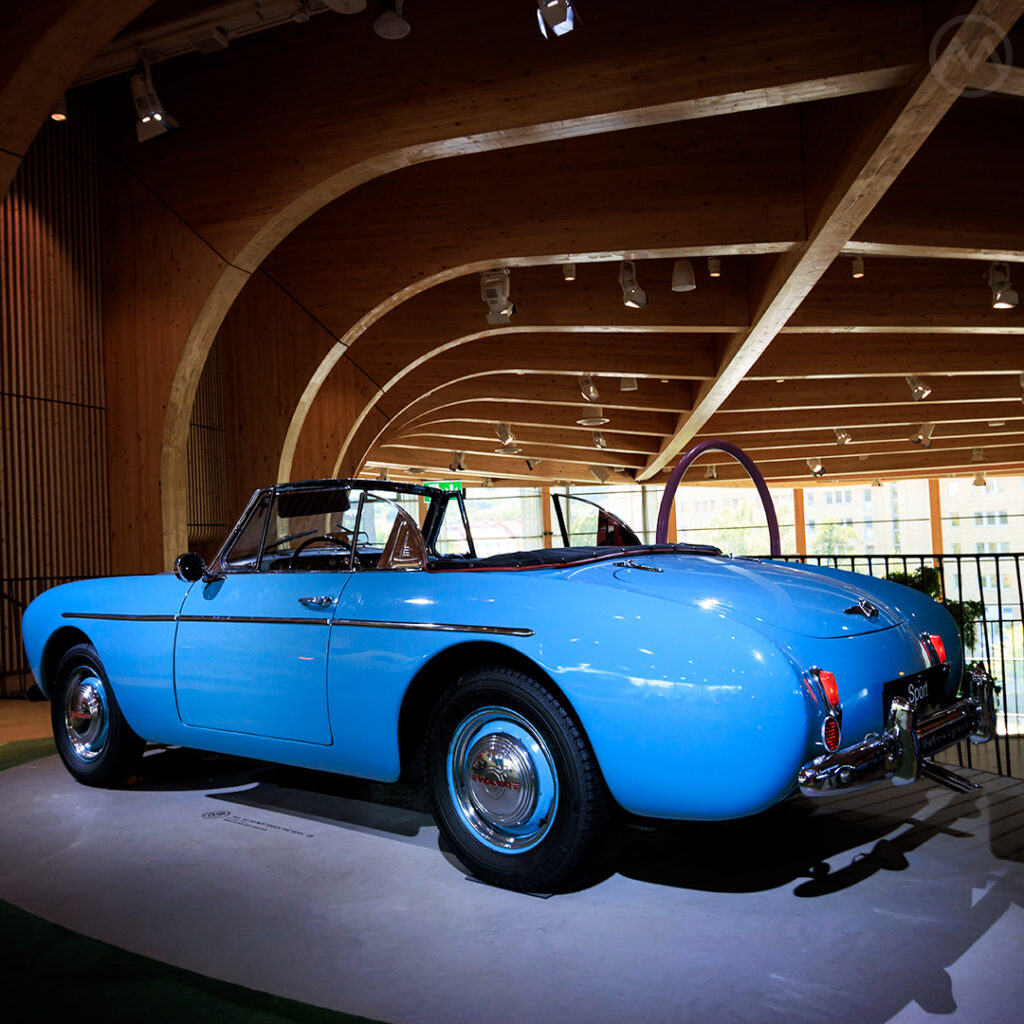
It’s fair to say that the new car, first the “Volvo Sport” and later the “Volvo P1900,” looked nothing like any previous Volvo or Swedish-made car. It was genuinely sleek, with clean round shapes, a low-slung look, and a big air intake up front that resembled the North American F-86 Sabre fighter jet, a plane which inspired many other cars of the fifties, including Oldsmobile’s 1954 F-88, built on a Corvette chassis and rockin’ a fiberglass body of its own. Inside, it had a driver-focused cockpit that resembled the best sports cars of the time.
The new Volvo was au courant, for sure, and fiberglass was the way it got there. But early fiberglass cars, and even many later ones, had some real downsides. Because the material can be molded and hardened, it allows you to shape complex curves that would be wildly expensive and difficult to mass-produce if you did them in sheet metal. One reason the early fiberglass flyers like the Glasspar G2 got so much attention is that the only other cars that looked like them were super-expensive customs done by places like Figoni-et-Falaschi in France or Zagato in Italy.
But the molds have to be big, and the material discourages tight shut lines and seams. Fiberglass did eventually get better, but in 1954 it took the resources of a GM to give it proper fit and finish, and as anybody who’s been in a British fiberglass kit car from the 1970s can tell you, or even an early Lotus Esprit, it was never a perfect material. Check out the panel gaps on any 1960s Lotus or TVR and you’ll see huge gaps that would never be acceptable today (unless you’re a Tesla stan, then somehow it’s okay).
It took huge efforts at GM and Kaiser-Frazer to make their fiberglass sports cars seem up to snuff, and Kaiser’s novel sliding doors eliminated the problem of loosey-goosey doors. Volvo’s design did not.
The Short Life of the Volvo P1900
Volvo’s featherweight chassis proved to be too flexible almost immediately, and the flex in the tube-frame design exacerbated the fundamental weaknesses of early fiberglass body shells. It was, of course, also an open car, which did not help. Tritt had designed a coupe and a convertible with a removable hardtop, but it was the latter than Volvo wanted.
The design also went through several iterations as Wilsgaard refined it. Many Volvo engineers had immediate reservations about its comfort and refinement levels, but the car debuted at the 1955 Brussels Motor Show early that year and went into production testing soon after. It earned plenty of positive press from the U.S. media, too, though few of them had driven it at the time. At home, Volvo was figuring out how to sort out the many problems of the fiberglass body and to fit a proper top.
In March of 1956, more than a year after the announcement, engineers Pelle Nystrom and Helmer Petterson took a P1900 on a 10,000-mile road trip from Sweden to North Africa to truly test the car, and the results were not good. The engine ran fine, but the body flexed pretty badly and, among other things, the doors would open at inopportune times. (Is there ever a good time for a car door to randomly open while the car is in motion? No.)
Gabrielsson retired that year, and his successor, Gunnar Engellau, soon took the car on a 500-mile trip of his own. When he returned, he supposedly told his staff, “I thought it would fall apart!” By the end of 1956, just 44 cars had been delivered, and 1957 seemed to be moving at a similar pace. Since the cars were basically being hand-assembled, the cost was just as high as if it had been made out of metal, and the materials just weren’t up to Volvo’s usual standard. In the U.K., the list price was higher than a Jaguar XK140, which made it totally uncompetitive. With all the issues, Engellau soon decided to drop the project altogether.
After the demise of the Volvo P1900, the company didn’t build another factory convertible until the C70 in 1997, though there were aftermarket P1800 conversions that looked super cool and of course, the fancy Bertone 262C and later 780 coupes.
Volvo entered the U.S. market in 1955 and no doubt Gabrielsson thought a sports car would make it easier, after all, Volkswagen trotted out the Karmann-Ghia that very year. In the end, Volvo did fine, starting out regionally in the Northeast and gradually spreading out to the rest of the country with the PV444 and later the 544 and Amazon/122 and the P1800.
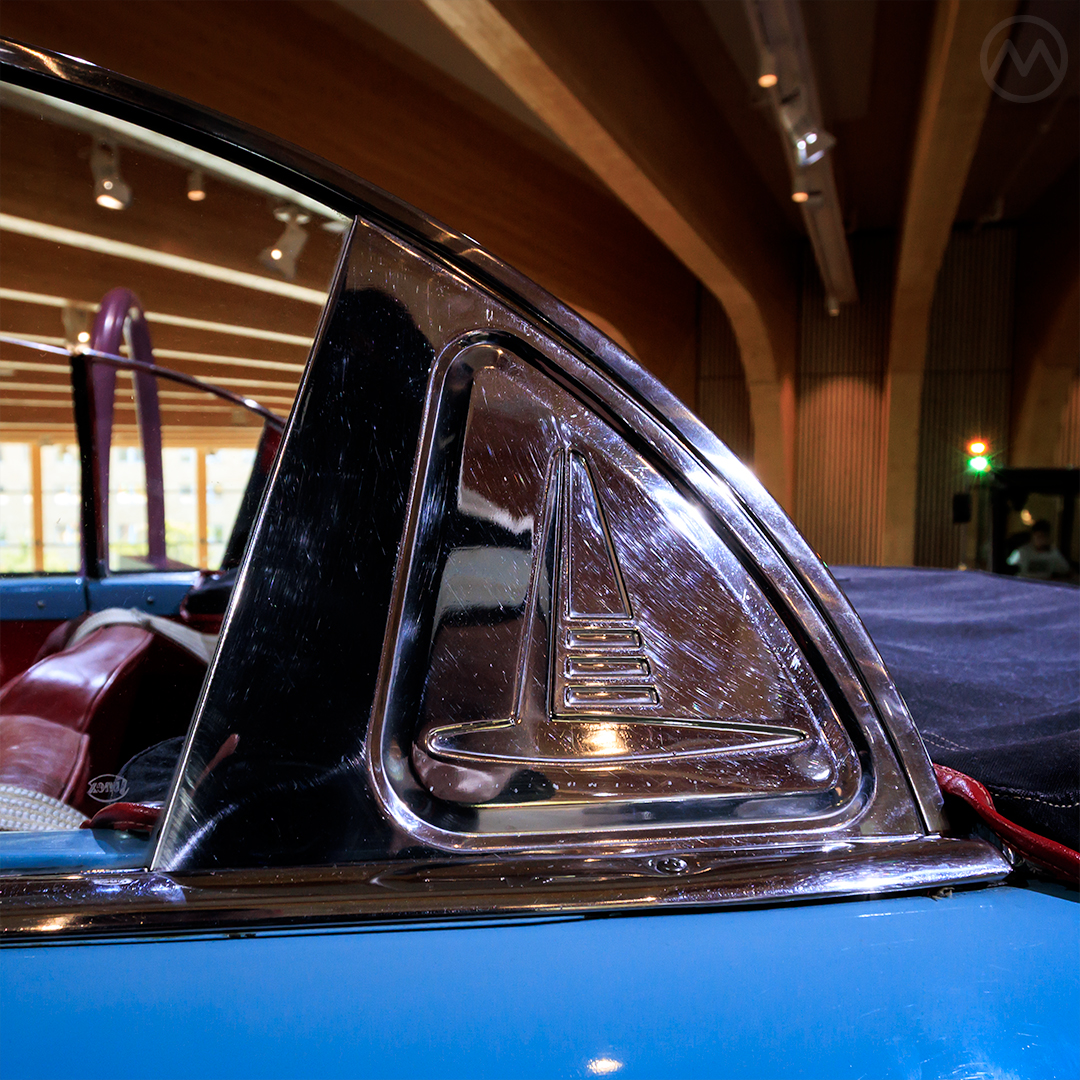
We photographed this lovely early Volvo Sport at the World of Volvo in 2025, and highly recommend a visit.